

Psilocybin and Bipolar Disorder: Risks, Research, and Screening
Psilocybin use in bipolar disorder raises questions about safety. Review potential risks, current research, and the role of mental health screening.
Psilocybin Mushrooms and People with Bipolar Disorder
People with bipolar disorder are typically excluded from modern psilocybin trials. This has typically included both those with a personal or family history of the condition, based on various risk factors that we will outline in this article.
Researchers have worried that the drug's serotonergic and psychological effects could tip someone into a manic episode, and until recently, almost no one had tested that concern directly. That's starting to change, and the picture that's emerging is fairly nuanced.
Under certain conditions, it seems psilocybin therapy could be helpful for some people with bipolar. But the treatment is not without its risks, in ways unique to bipolar disorder, owing to psilocybin’s potential to trigger or worsen manic symptoms.
Why Bipolar Disorder Has Been Excluded From Psilocybin Research
Every major psilocybin trial conducted over the past decade has excluded people with a personal diagnosis of bipolar disorder, and most have excluded people with a family history of it too.
The reasoning is precautionary: psilocybin activates serotonin 5-HT2A receptors, which researchers have suggested could trigger manic symptoms. The authors behind a case study of a psilocybin-induced manic episode, published in Frontiers in Psychiatry, state:
“Similar to other pro-serotonin agents, psilocybin, with its agonist action on 5-HT2A, can possibly flip a euthymic [emotionally stable] individual with bipolar propensities into a manic state. This may be akin to the effects of an antidepressant with serotonergic affinity inducing mania in an individual with a diagnosis or predisposition to bipolar disorder”.
What's less often said is that this assumption has rarely been tested in people with bipolar disorder themselves. A systematic review of the case study literature noted that the scientific evidence behind these exclusions has rarely been clarified and built on data specific to this population.
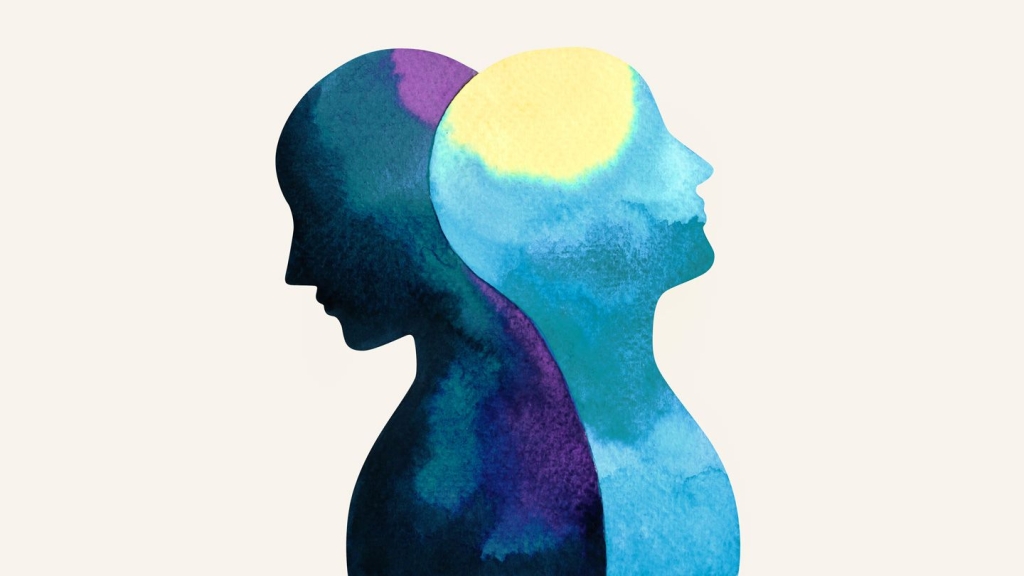
Nonetheless, beyond suggestions about the neurochemical mechanisms involved, intense psychological experiences can destabilize those predisposed to bipolar symptoms. As one paper points out, “A minority of individuals also report enduring manic-like responses to single doses of psilocybin mushrooms characterized by feelings of energy, racing and fixated thoughts, and inability to sleep.” Some intense altered states may also be characterized by grandiose thoughts and beliefs. Such a response may be more likely in those already predisposed to these manic symptoms. Moreover, broader neuroscientific perspectives may indicate why psychedelics pose a particular risk for those prone to mania.
Psilocybin, Bipolar Disorder, and the Entropic Brain Hypothesis
Robin Carhart-Harris et al.’s ‘entropic brain hypothesis’ proposes that psychedelics can be helpful for some mental health conditions but not others, due to similar effects on brain activity. Psychedelics increase what these researchers call ‘entropy’ (a term from physics). In this context, it refers to the level of disorder, disorganization, randomness, or chaos in the brain.
Carhart-Harris et al. argue that conditions such as depression, anorexia, and OCD involve low levels of entropy. They involve a high degree of order and rigidity, the subjective correlates of which include ruminative thinking, or being stuck in the same pattern of thinking.
Psychedelics may help people escape these rigid patterns of thinking by creating more disorganized brain activity. This can open up possibilities for new ways of thinking and feeling.
Mania, in contrast, can be viewed as a high-entropy brain state. It involves loose, flexible, erratic, fast-shifting patterns of thought, which often co-occur with symptoms such as mood swings, impulsivity, and grandiose delusions. In a subsequent paper on the entropic brain hypothesis, Carhart-Harris states that “the hyper-flexible (instable) individual may become vulnerable to mania-related symptoms such as inappropriate elation and grandiosity.”
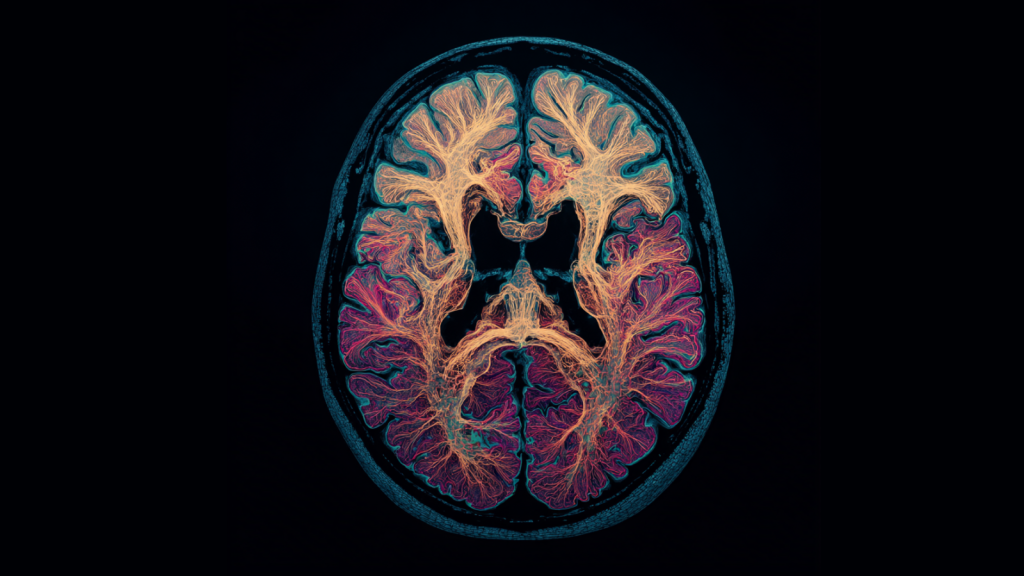
However, Carhart-Harris is referring to psychedelic users in general here. For those with a personal or family history of bipolar disorder, the risk of developing manic symptoms as a result of psychedelic use is likely higher. As Dr. Erica Zelfand puts it, “If we think of psychosis and mania as high chaos states, we can see how taking a chaos-increasing medicine like LSD might just push someone with a propensity towards mania or psychosis over the edge.”
Clinical Trials on Psilocybin for Bipolar II: What the Evidence Shows So Far
Crucial data comes from a 2024 open-label trial published in JAMA Psychiatry, conducted by Sheppard Pratt, a Baltimore-based psychiatric hospital, and Compass Pathways.
15 participants with treatment-resistant bipolar II depression received a single 25 mg dose of synthetic psilocybin, administered in a supervised clinical setting with therapeutic support before and after dosing. 73% met remission criteria on a standard depression scale within three weeks, and researchers reported no cases of psychosis during the trial, nor any increase in mania/hypomania symptoms or suicidality.
However, the authors note an important limitation of the study, including the small sample size, which means results may not apply to the general population of people living with bipolar disorder. Moreover, they state, “The single dose protocol of this study does not capture benefits or harms that could occur with multiple dosings.”
A separate controlled trial using repeated psilocybin doses in a similar bipolar II population found comparable results: strong antidepressant response, with no treatment-emergent mania, hypomania, psychosis, or suicidality.
These trials don’t form a solid conclusion that psilocybin is safe and effective for bipolar II, however. It is difficult to apply the results from time-limited studies to a condition that recurs and shifts over months and years. In addition, neither trial had a control group receiving a placebo dose, so it's hard to separate the drug's specific effect from the intensive therapeutic support that surrounded it.

Participants also discontinued their psychiatric medications, including mood stabilizers, for at least two weeks before dosing, which doesn't reflect how most people use psilocybin outside a research setting. As we will see below, using psilocybin in combination with certain medications may increase risks.
Sheppard Pratt, which led the trial, was explicit that its findings apply to bipolar II and cannot be extended to bipolar I. As the authors of the 2024 study in JAMA Psychiatry emphasize, “these findings cannot be extrapolated to patients with BDI or BDII in a mixed or hypomanic phase of their illness.” This is because people with bipolar disorder I are “at higher risk of mania and psychosis.”
Psilocybin Risk for People with Bipolar I Compared to Bipolar II
Bipolar II involves hypomania, a milder and non-psychotic elevated state, paired with depressive episodes. Bipolar I, in contrast, involves full manic episodes, which are more likely to include psychotic symptoms.
No completed clinical trial has tested psilocybin in anyone with a bipolar I diagnosis. The assumption that bipolar I carries higher risk is a reasonable clinical inference, given how much more severe its manic episodes tend to be. Still, it's an inference, not a finding drawn from rigorous, placebo-controlled studies.h. Readers should therefore treat any bipolar II safety data as informative only about bipolar II.
What this doesn’t mean is that psilocybin use among people with bipolar II involves the same level of risk as healthy populations or those with conditions commonly treated with psilocybin therapy, such as depression. Many psilocybin retreats still exclude people with bipolar II, based on increased risk. The potential subjective effects of psychedelics, as well as effects on brain activity, indicate the unique risk for those prone to mania. And, as we will see in research discussed later on, certain factors can increase the risks of psilocybin for people with bipolar II.
What is Known About Psilocybin-Induced Manic Episodes?
The research from Sheppard Pratt and Compass Pathways shouldn’t lead us to think that psilocybin’s risk for bipolar II is minimal. In contexts outside of psilocybin therapy and clinical trials, risks can be higher. We see this in case reports.
In the case study noted earlier, which examined psilocybin-induced mania, this was in a 21-year-old man who had recently been diagnosed with bipolar II disorder. He frequently missed taking or discontinued medication and had consumed psilocybin mushrooms several times with friends, not knowing exactly how much he consumed.
He didn’t report any negative experiences and described euphoric ones, which illustrates that psilocybin can carry risks for people with bipolar disorder in uncontrolled settings, even if the acute effects are positive. However, the authors underscore that conclusions are limited due to lack of information on dosing and the man’s concurrent alcohol and cannabis use.
A systematic review of the published literature, published in 2021, identified 17 cases of an adverse event possibly involving mania across psychedelics generally: five specifically involving psilocybin, and two involving people with a pre-existing bipolar diagnosis.
A 2025 review also points to three additional case reports of mania emerging after psilocybin use in people with no prior bipolar diagnosis but other risk factors present, including heavy or repeated dosing and concurrent substance use.
Seventeen cases sound concerning until you consider what it can and can't tell you. There's no reliable estimate of how many people with bipolar disorder have used psilocybin without incident, because uneventful use rarely gets written up and published. The review's own authors concluded there's reason for caution, but that the risk may be low relative to the treatment need in this population.
Nearly all of the documented cases involved unsupervised, recreational use rather than a single measured dose in a clinical setting. The Sheppard Pratt and Compass Pathways clinical trial suggests that when protocols such as screening, controlled dosing, a calming setting, preparation, psychological support, and integration are present, risks are reduced – at least in the case of bipolar II disorder.
Lithium and Psilocybin: How Combining Medications Raises Seizure Risk
Separate from the mania question, there's a more concrete pharmacological risk tied specifically to lithium. An analysis of self-reported psychedelic experiences collected from Erowid, Shroomery, and Reddit found that of 55 reports describing lithium combined with LSD, 27, or 49.1%, involved seizures. Of six reports describing lithium combined with psilocybin, two, or 33.3%, involved seizures.
By comparison, 34 reports describing lamotrigine (another mood stabilizer) combined with a psychedelic showed no seizures at all, and the psychedelic experience was reported as unaffected by lamotrigine 65% of the time, against just 8% for lithium. A case report in the adolescent psychiatry literature documented new-onset seizures in a teenager on low-dose lithium after LSD use, with no prior seizure history.
The absolute numbers here are small, particularly for psilocybin specifically, since only six lithium-plus-psilocybin reports exist in this dataset. But the direction of the finding is consistent across both psychedelics studied.
Lithium is treated as close to a universal exclusion criterion in current psilocybin trials, regardless of bipolar diagnosis, although the mechanism underlying its risk for inducing seizures when a psychedelic is involved is not fully understood.
Why Family History of Bipolar Disorder Remains a Contested Screening Factor in Psilocybin Therapy
Trial protocols have generally excluded not just people diagnosed with bipolar disorder, but people with a first-degree relative who has it, based on the evidence that family history signals elevated risk even without a diagnosis. It is estimated that genetic factors account for 60–80% of the cause of the condition. As a result, bipolar disorder is considered one of the most heritable mental health disorders.
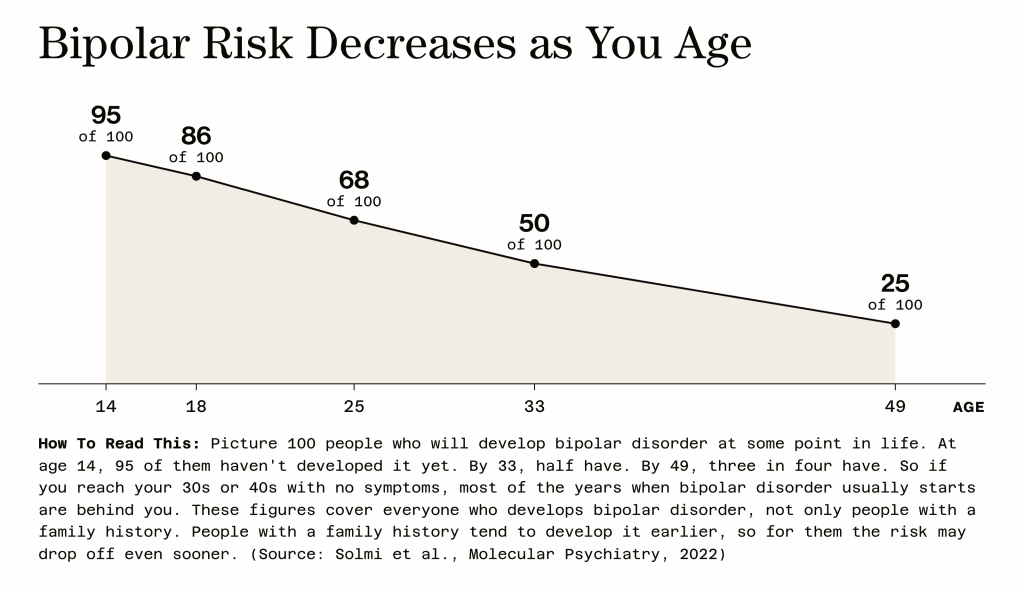
Nonetheless, the practice of excluding people with only a family history of the condition is now being actively questioned. A 2024 paper in Psychedelic Medicine argues that excluding people on family history alone isn't well supported by the available evidence. The authors behind the paper highlight that there is a continuum of risk, which is based on “an individual’s genetic proximity to the affected relative, BD type (BD1 or BD 2, with or without psychotic features), age at onset in the relative, and participant age”.
For example, those who are 40 years or older with one first-degree family member who had late-onset bipolar disorder are considered lower-risk candidates for psilocybin therapy than those under 40 years of age and who have multiple first-degree family members with a history of early-onset symptoms.
One study looking at naturalistic psychedelic use among people with a personal or family history of psychotic or bipolar disorders reached a similar conclusion. However, this was restricted to whether psychotic symptoms were triggered. The authors state, “Neither personal nor family history of bipolar disorder was associated with any psychotic symptoms.” They go on to stress that “the potential association between psychedelic use and manic symptoms is a cause for concern.”
There is, therefore, still mixed evidence and caution surrounding the risks of psilocybin use among those with a family history of bipolar disorder. Most current trial protocols still exclude based on family history. The argument for reconsidering it is serious and comes from credentialed researchers, but it hasn't yet changed standard practice, and it shouldn't be described as though it has.
Screening for Bipolar Risk in Psilocybin Therapy: What a Thorough Intake Should Cover
Bipolar spectrum disorders are frequently undiagnosed, which is part of why screening matters beyond simply asking someone if they've been diagnosed.
Screening for bipolar risk should be careful and rigorous, not relying on just one questionnaire or a simplistic one. Useful ones include the Mood Disorder Questionnaire, which correctly identifies bipolar spectrum disorder most of the time. But it also misses cases. This is why clinicians often use other industry-standard screening tools such as the Bipolar Spectrum Diagnostic Scale (BSDS), Hypomania Checklist (HCL-32), and Rapid Mood Screener (RMS).
Beyond these clinical tools, providers of psychedelic therapy should rely on honest self-disclosure from participants. Screening should also involve informed consent that includes disclosing risks surrounding bipolar disorder and psilocybin before therapy.
A thorough intake conversation should cover, beyond a diagnosis question, current medications (particularly lithium), any family history of bipolar disorder, and any past episodes of unusually elevated mood or energy that were never formally diagnosed.
Psilocybin and Bipolar Disorder: Where the Evidence Stands and What's Still Unknown
As we have seen from this discussion of the evidence, there is no simple answer to the question of whether psilocybin therapy is safe for the treatment of bipolar disorder. It depends on multiple factors, including the type of bipolar disorder, age of diagnosis, details about family history, and medication use.
All of these considerations lead the authors of the 2024 paper in Psychedelic Medicine to focus on the relative risks surrounding psilocybin and bipolar disorder, rather than absolute risks. They write:
“Balancing the need for effective treatments against the potential for serious adverse events in those undergoing psilocybin therapy with a family history of BD, we argue for caution in psychedelic clinical trials but not outright exclusion of these individuals. Our risk stratification tool allows for more nuanced inclusion and exclusion criteria.”
A reconsideration of currently strict exclusion criteria and future research on psilocybin for bipolar disorder may lead to a relaxing of these criteria, enabling at least some people with bipolar disorder to be considered good candidates for legal psilocybin therapy. However, for the time being, it is considered a wise precautionary measure within the psychedelic therapy field to screen for bipolar disorder during the screening process.
FAQs About Psilocybin and Bipolar Disorder
Can someone with bipolar I disorder ever be included in a psilocybin trial?
No completed clinical trial has enrolled participants with bipolar I disorder, so there's currently no direct evidence either way. That's different from saying it will never happen. As bipolar II research expands, researchers may eventually design bipolar I studies with additional safeguards, but that hasn't occurred yet, and any claim about bipolar I safety is currently unsupported by trial data.
Do mood stabilizers increase the risk of psilocybin?
It appears to. In the same analysis that found a high seizure rate among lithium and classic psychedelic combinations, lamotrigine, a different mood stabilizer, showed no seizures at all across 34 reported combinations. The two drugs work differently in the brain, and the available evidence doesn't treat them as equivalent risks. But lamotrigine is not the only mood stabilizer used in the treatment of bipolar disorder. Other commonly used drugs to stabilize mood include the anticonvulsants valproate and carbamazepine, and atypical antipsychotics such as quetiapine, aripiprazole, and olanzapine. Potential psilocybin therapy participants should therefore consult with their psychiatrist and the psilocybin therapy provider about the interactions between these drugs and psilocybin.
If someone has a family history of bipolar disorder but no personal diagnosis, are they automatically excluded from psilocybin therapy?
In most current trials, family history alone is still treated as an exclusion criterion, and many retreats and clinics will follow this practice until research can definitely say otherwise. Some researchers have recently argued this practice isn't well supported by evidence and should be reconsidered, but that argument hasn't yet changed standard trial design, and the question remains genuinely unresolved.
How is a manic episode from psilocybin different from the drug's normal psychoactive effects?
Psilocybin's typical effects, including altered perception and emotional intensity, usually resolve within 6–8 hours. A manic episode is a distinct clinical state involving elevated mood, decreased need for sleep, and impulsive behavior that persists for days, well beyond the drug's pharmacological effects. Anyone concerned about their personal risk should raise it directly with a psychiatrist rather than relying on general information.