

Ketamine vs Psilocybin: Differences in Origin and Experience
Explore key differences between ketamine and psilocybin, including origins, mechanisms, experiences, and what people should know when comparing the two.
Published on: January 22, 2026
A Complete Comparison Guide for Ketamine vs Psilocybin
Ketamine and psilocybin are two popular compounds that can be used in a therapeutic context. Ketamine therapy and psilocybin therapy are proving useful for the treatment of mental health conditions such as depression, anxiety, addiction, and PTSD.
Yet, while both ketamine and psilocybin can induce profound alterations in consciousness, there are still several important distinctions between the two compounds. In this article, we’ll be unpacking these differences, which will cover the origins of these compounds, their mechanisms, the key distinctions between the experiences they offer, and much more.
Why People Compare Psilocybin vs Ketamine
People often compare ketamine with psilocybin because they both alter states of consciousness, have been studied alongside one another through the psychedelic renaissance, as well as alter brain activity and structure in ways that can alleviate psychological distress.
In the science of psychedelics, ketamine and psilocybin are two of the main compounds that researchers are interested in that have the potential to offer people significant and lasting mental health benefits. But as we’ll see, when we compare research on ketamine and psilocybin, mental health outcomes of ketamine therapy and psilocybin therapy differ in some ways.
Another reason people compare ketamine vs psilocybin is that the therapeutic application of them is legal in several countries and jurisdictions, and people are curious see which might be better for their needs.
This means that people have the opportunity to visit legal, safe, and regulated ketamine clinics and psilocybin retreats and service centers. However, the application of ketamine therapy is not exactly the same as psilocybin therapy, as the setting and procedures will often be quite different (with some similarities, as well).
People also compare psilocybin and ketamine because they are highly popular in recreational, spiritual, and therapeutic contexts (outside of legal settings). Psychedelic users who have experience with both will naturally recognize the unique effects and notice how they differ. Many people will prefer one effect over the other, often depending on the context.
Origins of Ketamine vs Psilocybin: Synthetic vs Natural Compounds
Ketamine, unlike psilocybin, is synthetic in origin. Ketamine was first synthesized in 1962 by Calvin Stevens and was considered an excellent short-acting anesthetic. It was originally created in the hopes of finding an anesthetic like phencyclidine (PCP), without the side effects of PCP (such as prolonged delirium). Unlike, say, LSD, which is originally derived from naturally occurring ergot fungus, ketamine is made entirely through laboratory processes.
Throughout the 1960s, ketamine continued be used as an effective anesthetic. In 1970, the FDA approved it as an anesthetic, which was available to the general population under the trade name Ketalar. In the 1970s, ketamine was widely used for surgical anesthesia in the Vietnam War.

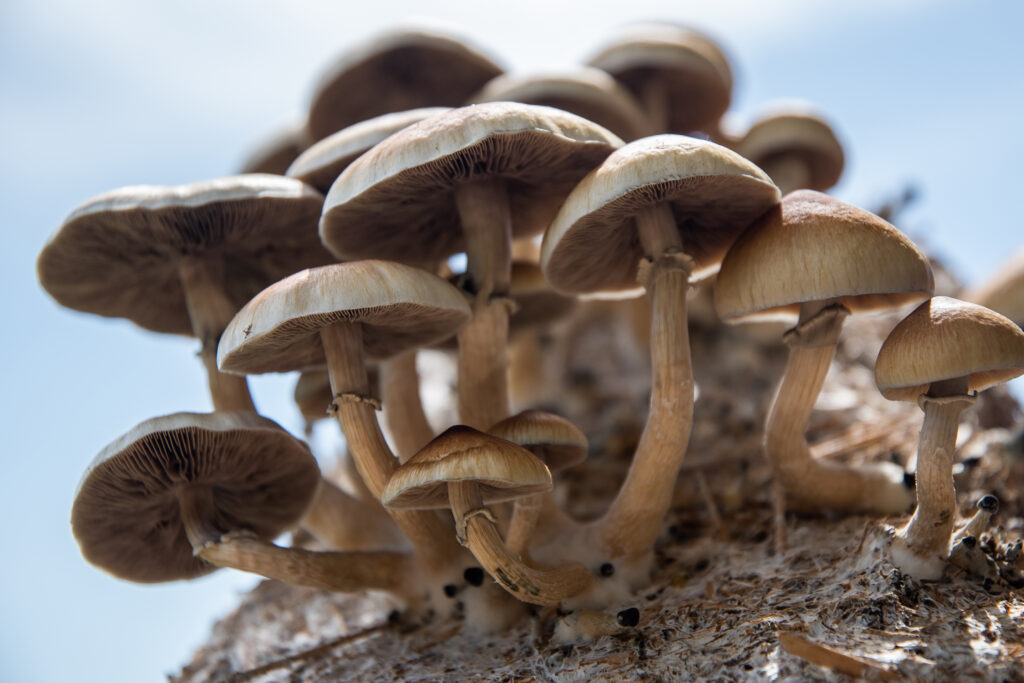
Psilocybin, in contrast, is natural in origin and is much older than ketamine. Researchers believe it first evolved in mushrooms around 65 million years ago, with scientific hypotheses on its purpose focusing on its role as a deterrent, such as deterring insects from feeding on psilocybin mushrooms. Researchers speculate it could do this through appetite suppression or disorienting effects.
Some even suggest psilocybin arrived on Earth through panspermia. This scientific hypothesis encompasses different theories:
- Naturalistic Panspermia: Life on Earth may have originated elsewhere in the cosmos and eventually reached our planet by chance.
- Directed Panspermia: Life on Earth may have been deliberately seeded by intelligent extraterrestrial beings.
- Intelligent Design: Life on Earth may have emerged from conditions deliberately engineered by advanced extraterrestrial intelligences.
As radical as these theories appear to be, many users of psilocybin give this serious consideration, given its indescribable effects at high doses.
However, we don’t know definitively or precisely how psilocybin benefits mushrooms that contain it. But we do know that psilocybin first emerged long before humans ever existed, and most researchers don’t consider it to be a useless byproduct of fungal metabolism. While we don’t know exactly why it originated, many scientists believe it was likely related to the predators found in psilocybin mushrooms’ ecological niche, whereas figures such as Terence McKenna proposed it may have arrived from outer space.

How Ketamine vs Psilocybin Work: Differences in Brain Mechanisms
While ketamine and psilocybin alter consciousness, they do so through different means. Psilocybin metabolises into psilocin when ingested; psilocin then attaches itself to multiple receptors, but is thought to primarily cause psychedelic effects by activating serotonin 5-HT2A receptors. Ketamine, on the other hand, causes psychoactive effects by blocking NMDA (glutamate) receptors.
Both ketamine and psilocybin work to improve mental health on multiple levels:
- Psychological
- Spiritual
- Neurological
Let’s take a look at these three different levels of explanation to show us the ways in which ketamine and psilocybin differ.
Psychological Effects of Ketamine Therapy vs Psilocybin Therapy
Researchers believe that the benefits of ketamine may partly derive from the shifts in mindset and perspective that can occur during ketamine experiences. Since ketamine induces altered states of consciousness, people may gain new perspectives on themselves and the emotional problems they’ve been struggling with. Other researchers have similarly stated that the integration of insights in ketamine-assisted therapy strongly contributes to mental health benefits.
The psychological effects of psilocybin, according to research, are considered to be a strong predictor of therapeutic outcomes. In one paper, the authors conclude that insights on classic psychedelics (such as psilocybin) may be a stronger predictor of therapeutic benefits than mystical-type experiences. (For clarity, they define insight as “a sudden change in understanding or perspective that feels true or reliable”.) Researchers have found that subjective effects are less likely to mediate the benefits of ketamine compared to psilocybin.
Spiritual Experiences on Ketamine vs Psilocybin
Both ketamine and psilocybin can induce mystical experiences. And these experiences – of ego dissolution, unity, sacredness, and ineffability – are associated with improvements in clinical depression and anxiety.
While ketamine can induce intense mystical experiences, it does so less frequently than with classic psychedelics like psilocybin. Therefore, if mystical experiences play a role in alleviating emotional distress, this is potentially one way in which psilocybin has greater potential.
Neurological Differences Between Ketamine vs Psilocybin
Both ketamine and psilocybin promote rapid neuroplasticity in the brain, which is correlated with improved sustained mental health benefits in patients. However, the main way in which ketamine is believed to benefit patients with depression and suicidality is through these rapid brain changes, since, as we saw earlier, the subjective effects of ketamine matter less in terms of reducing depression and anxiety.
Moreover, ketamine and psilocybin promote greater neuroplasticity through different pathways: in the case of ketamine, by blocking NMDA receptors, and in the case of psilocybin, by activating serotonin receptors.
Different Mental Health Outcomes
It’s worth noting that the benefits of ketamine and psilocybin vary in how long they are sustained.
Research shows that the depression-reducing benefits of ketamine last a few days to two weeks: this is why multiple rounds of ketamine therapy sessions are often undertaken. This is critical for extended recovery.
In contrast, 1-3 psilocybin sessions have been found to offer sustained mental health benefits for up to a year (some patients will also remain in remission longer than this).
Data gathered from MycoMeditations retreats shows that attendees report significant, long-term reductions in PTSD, depression, and anxiety symptoms, with symptoms decreasing over 50% when measured one year post-retreat.
While research is still investigating why ketamine and psilocybin differ in their long-term benefits, one potential reason, as we touched on, is that psilocybin often provides a more emotionally, psychologically, and spiritually profound kind of experience.
The Experience of Ketamine vs Psilocybin
While both ketamine and psilocybin can produce effects like introspection, insights, visions, heightened emotions, and mystical experiences, the subjective effects are not exactly the same.
First, ketamine is classed as a dissociative anesthetic. It reliably produces dissociative experiences, such as feeling detached from one’s body and other kinds of out-of-body experiences. As a dissociative, it is also common for people to feel more ‘at a distance’ from psychological material, which can help people observe and examine this material without feeling overwhelmed.
Interestingly, this dissociative compound can be used to help people who are dissociated from their traumatic experiences. One psychedelic therapy training even focuses on addressing dissociation with ketamine.
Trauma can leave people either slightly or highly dissociated from the event or experiences as part of the body’s defense mechanism. It could be reasonable to suggest that ketamine mutes the part of the mind that is holding the dissociated trauma response so that the raw experience can be accessed and processed to at least some degree.
Psilocybin, in contrast, is not a dissociative but is instead, a classic psychedelic. Dissociating experiences are possible, but this only really happens when the experience isn't approached or handled with care. The acute distress of such an experience can cause someone to feel disconnected from their body, self, or world.
Generally, when it comes to the therapeutic effects of psilocybin, it works in essentially the opposite way of ketamine.
Where ketamine tends to quiet everything enough for traumatic material to arise in a neutral, indirect way, psilocybin gradually opens people to the raw emotions and feelings behind the trauma. In this way, psilocybin therapy allows people to go straight to the core of what they are holding onto.
While this process often makes psilocybin therapy more intense, we suggest that this is why therapeutic outcomes are deeper and better sustained.
At some point, you must go back to where it started if you want to heal.
Classic psychedelics like psilocybin also tend to produce more ‘classic’ psychedelic visual effects, such as color enhancement, geometric visual effects (with eyes open and closed), and objects breathing and morphing.
Ketamine often distorts visual perceptions, too, but with eyes open, this tends to be more distortions in perspective and size (e.g., things appearing closer or further away than normal, or things looking bigger or smaller than normal).
With eyes closed, the visuals of ketamine typically differ from those produced by psilocybin. Often, the visual experience is described as more dream-like and immersive, while psilocybin often produces more vibrant and symbolic imagery.
Another key way in which ketamine differs from psilocybin is in the duration of the experience. You can expect to be back to baseline an hour after taking ketamine, whereas for psilocybin, the journey back to baseline takes anywhere from four to six hours.
The onset of ketamine’s effects is also quicker than that of psilocybin: they occur within seconds or a few minutes following administration (i.e., intravenous (IV) or intramuscular (IM) injection), whereas after consuming psilocybin mushrooms, the first effects are usually felt within 30-60 minutes.
Therapeutic Settings and Delivery Methods: Psilocybin vs Ketamine
In countries where ketamine therapy is legal, it is administered in a clinical setting. Where psilocybin is legal, however, it is not typically administered in a medical setting such as a hospital or clinic (except in the case of legal psilocybin clinical trials).
The exception, in the case of ketamine, is ketamine telehealth therapy, where someone self-administers sublingual ketamine (a dissolving tablet) at home, with video chat support from a mental health professional.
In the case of Oregon, psilocybin sessions can be legally held in service centers, which are not ‘clinics’ in the traditional sense – they do not provide diagnosis or prescriptions. However, they may be thought of as clinics in a therapeutic or wellness context, in that people visit them to improve their mental health.
Where psilocybin is legal, psilocybin retreats often operate as well, whereas ketamine can only be legally administered in a licensed medical setting. Taking ketamine may, in more limited cases, be taken in a retreat setting, but the administration itself would have to be in a medical capacity.
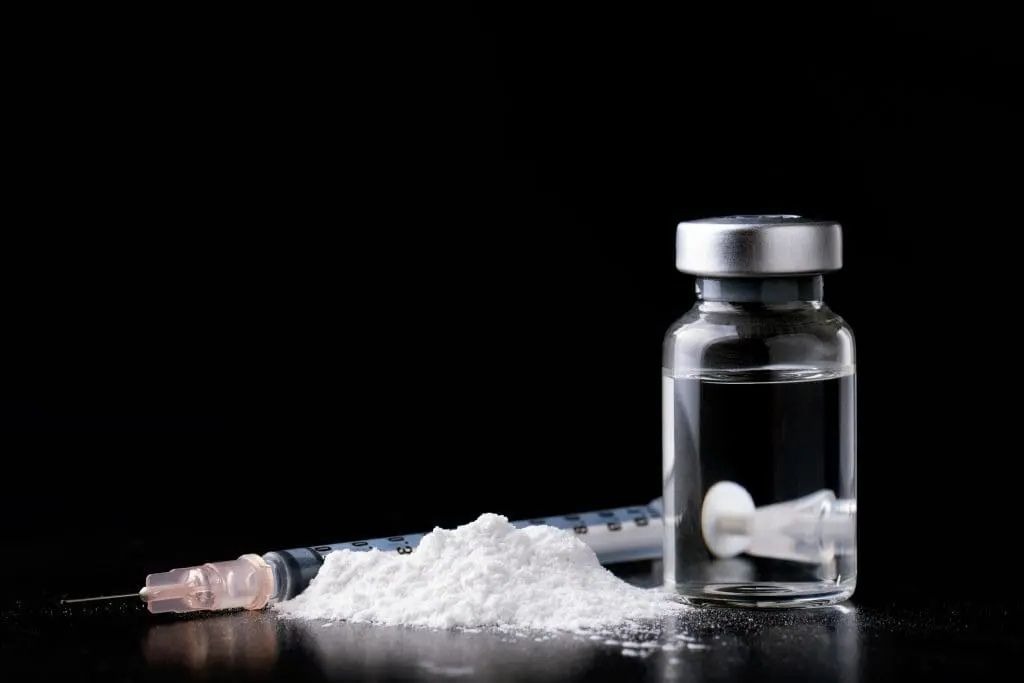
In a therapeutic context, ketamine is typically delivered via IV injection (although IM injection can be used, as well, with the onset of effects occurring more quickly with IV). Lozanges are common too.
Psilocybin, on the other hand, is always taken orally (as whole psilocybin mushrooms, typically dried, or as an extract or in synthetic form). Unlike ketamine, psilocybin is never delivered via injection; it is also never snorted, as ketamine normally is in recreational contexts or when using the FDA-approved nasal spray (Spravato).
Legal Status and Access: Ketamine vs Psilocybin by Country
As a mental health treatment, ketamine is legal in the US, the UK, Canada, Australia, and all EU member states. Legal psilocybin therapy, meanwhile, is available in Oregon, Colorado, Jamaica, the Netherlands, Australia, Canada, and Switzerland.
However, the ability to access ketamine therapy and psilocybin therapy often differs. For example, ketamine-assisted psychotherapy is FDA-approved for the treatment of treatment-resistant depression and major depression with suicidality. It can also be legally used off-label to treat other conditions like PTSD, anxiety disorders, OCD, bipolar disorder, and substance use disorders.
In Oregon and Colorado, on the other hand, legal psilocybin sessions are available to anyone aged 21 and older, regardless of medical diagnosis. And in countries with more restricted access – such as Canada, Switzerland, and Australia – psilocybin therapy is available to patients only if they meet a specific diagnosis, such as treatment-resistant depression and end-of-life distress.
Safety and Screening: Ketamine vs Psilocybin Risks and Eligibility
Ketamine and psilocybin also differ in their safety profiles.
Ketamine has a (much) higher potential for abuse, and ketamine abuse and addiction are associated with physical problems such as incontinence and bladder damage. The term ‘K bladder’ has emerged from this link. Psilocybin, on the other hand, is physically non-toxic and non-addictive.
Screening for ketamine therapy and psilocybin therapy differ as well. While schizophrenia is typically an exclusion criterion for both treatments, patients with suicidality and bipolar disorder can be accepted for ketamine therapy (as it’s deemed safe and effective, and in the case of suicidality, potentially life-saving).
However, people with bipolar disorder and suicidality are usually screened out of psilocyin clinical trials and psilocybin therapy, due to concerns that the experience may trigger or worsen a manic episode or suicidality, respectively.
Ketamine and Psilocybin Are Different Tools: Comparison Should Be Contextual and Safety-First
Ketamine and psilocybin are both promising new treatments for a range of mental health conditions. They both provide benefits to people through altered states of consciousness combined with enhanced neuroplasticity.
However, as we’ve seen, there are important differences between the two compounds in terms of experience, duration, legality, safety, and potential benefits. So while ketamine and psilocybin share some similarities, their differences need to be understood so that they can be used safely, in the right instances, and with realistic expectations.
With this understanding in place, one can approach ketamine therapy or psilocybin therapy with a prepared mindset, which is essential for having beneficial, therapeutic experiences.
Ketamine vs Psilocybin FAQs: Experience, Safety, and Therapy Differences
What is ketamine, and how is it different from psilocybin?
Ketamine is a dissociative anaesthetic with psychedelic effects. It’s different from psilocybin because it is synthetic in origin (although it can, in very limited contexts, occur in nature); it is classed as a dissociative; it was first used as an anesthetic (whereas psilocybin, as far as we know, was first used by humans as a religious sacrament); and it creates subjective effects through activity at glutamate receptors (rather than serotonin 5-HT2A receptors in the case of psilocybin). Also, psilocybin is a classic psychedelic, whereas ketamine is commonly referred to as a non-classic psychedelic.
How do ketamine and psilocybin experiences feel different?
Ketamine experiences tend to feel more dissociating, where you feel detached from your body, with more dream-like visions. Psilocybin experiences tend to involve more vivid colors, intricate patterns, symbolic imagery, and deep introspection. Psilocybin experiences are also more likely to involve entity encounters and mystical experiences.
What are the biggest differences in setting and session structure?
Legal, therapeutic ketamine experiences take place in a medical setting only, whereas legal, therapeutic psilocybin experiences can – depending on the jurisdiction – take place in a more home-like setting (i.e., a service center) or a villa-like setting in nature (i.e., a retreat). Ketamine therapy tends to involve 6-12 dosing sessions over several weeks, whereas psilocybin therapy involves 1-2 dosing sessions (spaced 1-3 weeks apart). However, at some psilocybin retreats, longer programs can involve three dosing sessions. A ketamine session is shorter than a psilocybin session (30-120 minutes vs 4-8 hours).
What safety factors should people consider before choosing either option?
Before choosing either ketamine therapy or psilocybin therapy, would-be participants should consider their family and mental health history, medication use, alcohol and drug use, and any underlying medical conditions.
How should integration differ between ketamine and psilocybin experiences?
Since the brain plasticity benefits of ketamine seem to be more critical for mental health benefits than its subjective effects, integration should be about making the most of this more plastic state. This means working with people on maintaining positive shifts and cognition, and developing healthier habits and relationships. Integration tends to be more future-oriented. Integrating psilocybin experiences, however, tends to be more about making sense of a symbolic, emotionally intense, spiritual experience. While psilocybin integration is often future-focused, it tends to be highly experience-oriented. This difference reflects the common need to make sense of psilocybin experiences that may be abstract, ambiguous, confusing, overwhelming, or challenging.