


Finding Life Purpose Through Psilocybin Therapy
Explore how psilocybin therapy is being studied as a tool for reflection and perspective shifts—within safe, ethical, and research-informed contexts.
Published on: January 19, 2026
Psilocybin Therapy & How it Can Help People With Life Purpose
Finding life purpose is difficult. Everyone wants to feel that their life is going in a meaningful direction and that they are connected to a passion that brings them genuine fulfilment and satisfaction.
But how do we actually find life purpose? It’s not as easy as deciding on any random goal or career path, or what others tell us we should do, and hoping that this will feel purposeful and meaningful.
There are many ways to arrive at a more authentic (freely chosen and personal) sense of purpose in life.
Finding life purpose in this way often involves periods of introspection and self-reflection to discover one’s core values, which you can then shape and mold into a desired lifestyle.
A new path for catalyzing this process of self-discovery is psilocybin therapy.
Psilocybin experiences with psychological support – before, during, and after – allow people to have deep, internal experiences that catalyze the radical introspection and self-reflection needed to find life purpose. It’s no surprise that many people report their psychedelic experiences as one of the most meaningful experiences in their lives.
In this article, we’ll be delving into finding life purpose through psilocybin and the research indicating that this is a real benefit of psychedelics (and an underappreciated one).
What Is Life Purpose? Meaning, Direction, and Personal Values
“Life purpose” is one of those terms that, due to its complexity and philosophical roots, can be tricky to define.
Meaning and purpose tend to go hand in hand, and might be viewed as interchangeable in some people’s eyes, but they are distinct.
According to cognitive scientist John Vervaeke, meaning refers to one’s ongoing relationship to reality, specifically, being deeply connected to reality and gaining wisdom through this relationship. In contrast, life purpose is goal-oriented; it is an overarching direction or motivation in one’s life. Life purpose is one’s “mission”. For life purpose to be meaningful, however, it has to be coupled with deep connectedness to reality, wisdom, and self-transformation.
Of course, one person’s purpose in life will be different from someone else’s. This is because, as mentioned earlier, people have core values, and these values are unique for different people. People, of course, differ in their interests as well, which also determine a path in life that feels purposeful.
Signs of purposeful activities in life, which have a life-enhancing goal or effect, include:
- Personal growth: The activity leads to the improvement of one’s abilities, virtues, and relationships. Another way to phrase this is to say that the activity, project, or path in life benefits self-actualization, which the psychologist Abraham Maslow defined as the realization of one’s true potential; or as he put it, "What a man can be, he must be.”
- Sense of fulfilment: The activity provides a feeling of enthusiasm, joy, and peace.
- Contributions to others: Meaningful activities, or those with a purpose, are also those that improve the lives of others. This might involve committing oneself to a cause bigger than oneself, such as poverty or the climate crisis, or even just being committed to being more compassionate and friendly in everyday life.
- Fostering connection: A greater feeling of connectedness in life, whether it's with others or the world around us, often feels like a life purpose for many. Without a genuine sense of connection, it can feel like an essential element of life is missing.
- Spirituality: For many, this involves being in relationship with a higher power or spirit(s), whereas for more secular-minded people, spirituality may encompass the other factors we’ve taken a look at: growth, deep fulfilment, serving others, and connectedness.
Why So Many People Struggle With Finding Life Purpose
Now that we’ve outlined the key aspects of life purpose, why do many people struggle to find it?
There is no single answer to this question that applies to all people. Nonetheless, there are several possible barriers that get in the way of people finding their life purpose.
External Pressures and Social Expectations
First, we all face and are influenced by external social pressures at one point or another.
Expectations from parents, other family members, friends, and cultural narratives can lead one to pursue a career or life goals that don’t feel personally fulfilling. This means we must become conscious of whether these external pressures are even valid.
Do they make sense?
Do they serve our best interests?
Often, these pressures are based on norms and values that have been built up through generations, maintained by tradition, culture, and even trauma. If strictly adhered to, these external pressures can get in the way of many people’s life purpose.
A Lack of Self-Reflection and Introspection
Second, many people live a life without dedication to self-reflection.
This often isn’t due to a lack of time; self-reflection just requires mindfulness, prioritization, and discipline. The nature of our fast-paced society and a cultural lack of value in introspection mean that self-reflection sits far down on the list of what many people value. And often, not understanding why it’s healthy to question our way of living means that introspection is never valued in the first place. Once introspection is prioritized and become a normal part of existence, people naturally self-reflect in ways related to their life.
Patience, Change, and the Evolving Nature of Life Purpose
Third, self-reflection might not deliver any concrete answers right away, but that’s because it takes time to understand one’s life purpose. It's a process of continual observing, listening, learning, and shifting. Finding life purpose is an active pursuit, not a passive or random occurrence.
A person's purpose is likely to change throughout their life. To identify and connect with the current sense of purpose, alongside the awareness to understand when it changes, is a continual pursuit. Embrace this as an ongoing process for living a healthy life.
Psilocybin Therapy as a Catalyst for Finding Life Purpose
Psilocybin therapy is seen as a powerful way to discover or reconnect with life purpose. Psychedelic experiences open windows of intense self-reflection and profound insights, often related to themes like meaning, purpose, authenticity, and personal growth.
There are multiple ways in which psilocybin therapy leads to these kinds of insights.
Disrupting Default Thought Patterns Through Psilocybin Therapy
One way psilocybin is effective at helping people find life purpose, for both healthy populations and people struggling with a mental health challenge, is through the disruption of default ways of thinking. And we know at the level of the brain.
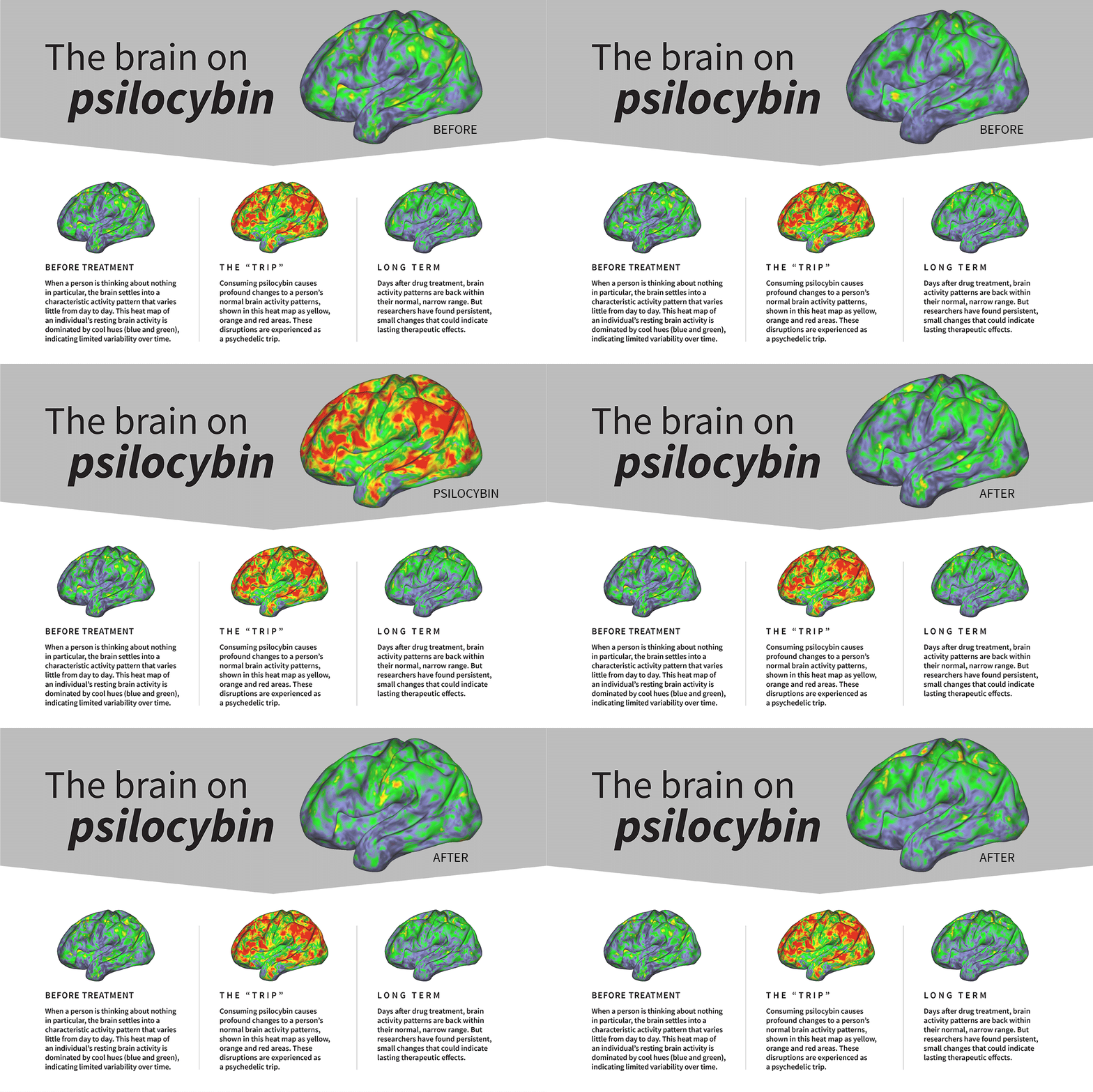
The default mode network (DMN) is a brain network that is most active when the brain is at rest, such as when recalling memories, planning for the future, daydreaming, and mind-wandering. It is involved in self-reflection and our sense of self. Psilocybin has been shown to dampen DMN activity. This mechanism frees people from their habitual thought patterns and sense of self.
As a result, the brain becomes hyperconnected. Brain regions that don’t normally communicate with each other start doing so, and this allows new, alternative kinds of thinking and self-perception to emerge. This window of experience often comes with impactful insights, new perspectives, and new models of reality.
Mental health conditions such as depression and anxiety can also interfere with connecting to your purpose in life. Finding life's purpose could be considered the top of Abraham Maslow's hierarchy of needs. People will struggle with connecting to this need if they are bogged down by feeling worried, depressed, and ultimately unsafe. There isn’t enough space available for higher-order thinking.
However, psilocybin creates this space by weakening the DMN. Distinct DMN activity has been linked to rumination in mental health conditions like major depressive disorder (MDD). In other words, people with conditions like depression, anxiety, and OCD repeat the same negative thought patterns, which contribute to emotional distress.
In depression, self-referential thinking – the kinds of thoughts people have about themselves and who they are – becomes overly and consistently negative. People can feel like they have no purpose and nothing to offer to the world.
By freeing people from these mental ruts by disrupting the DMN, psilocybin allows people with mental health conditions to reconsider who they are and their life’s purpose.
Emotional Breakthroughs, Insights, and Mystical Experiences in Psilocybin Therapy
According to MycoMeditations CEO & Head Facilitator Justin Townsend, the three key mediators of psychedelic experiences are emotional breakthroughs, cognitive insights, and mystical experiences.
First, psilocybin often results in emotional breakthroughs or experiences of deep catharsis and resolution of an emotional wound or problem in one’s life.
Our experience of life and the ways of interacting with it are shaped by our past experiences. Many people have unprocessed trauma – singular trauma or complex traumas – which prevents them from having a more authentic, core connection to life. Psilocybin experiences can help people break through these emotional blocks and gain a clearer sense of life purpose.
Second, the psychological insights occasioned through psychedelic experiences often possess a connection as if they are coming from a higher place, such as a part of you beneath all the layers of trauma, conditioning, defence mechanisms, and bias. The filters of reality are pulled back for people, where access to a pure layer of thinking and processing takes place.
A 2025 study, for example, found that people who’ve had psilocybin experiences reported “long-lasting insights into their lives and values.” In a single psilocybin experience, someone may have deep insights that lead to the discovery of a life purpose.
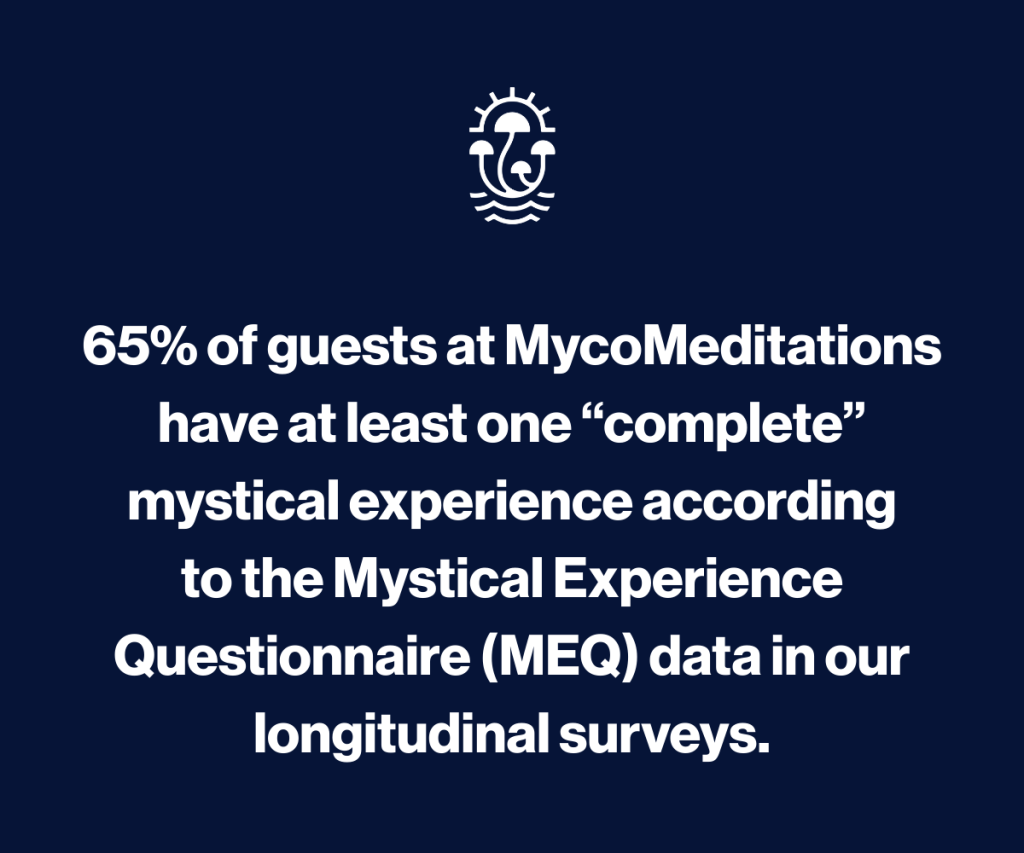
Third, at high enough doses, and with the right preparation and support in place, psilocybin can induce mystical-type experiences. These are states of consciousness that feature qualities like ego dissolution, unity, interconnectedness, a sense of the divine or sacred, transcendence of time and space, ineffability, and a noetic quality (the feeling that the experience is objectively real).
Through mystical experiences, people finally connect to a state of being that doesn’t revolve around themself. People connect with something larger than themselves, and clarity around their own unique place within the bigger picture of life emerges. It's also well-known in psychedelic research that mystical experiences are correlated with a range of persisting and positive effects in people.
Metaphysical, Spiritual, or Long-Term Perspective Shifts After Psilocybin Therapy
Psilocybin therapy, often because of the profoundness of mystical experiences, may lead people to adopt new worldviews.
For example, many (but not all) participants become more inclined to adopt metaphysical beliefs, such as panpsychism (consciousness is everywhere), idealism (consciousness is fundamental and the only real thing), animism (everything has a soul), and belief in God, a higher power, or ultimate reality.
Many people also shed their fear of death, which some research has tied to mystical experiences, as many people come away with a belief in consciousness continuing after death. Newer research finds a stronger predictor of reduced death anxiety is “impermanence acceptance”: the emotional acceptance of the fact that one’s life is temporary.
Other possible long-term perspective shifts caused by psilocybin therapy, which can make finding life purpose easier, are enhanced empathy and prosocial behavior, greater connectedness to others, and increased care for the environment and pro-environmental behaviors.
Changes of this magnitude related to such a core belief system within people will greatly shape their felt sense of life purpose.
Psilocybin Therapy May Open New Perspectives – But Purpose is Built Over Time
We can’t discuss important life changes related to psilocybin without emphasizing the importance of integration after psilocybin therapy. It’s one thing to have a clear insight into what one’s meaning and purpose in life is. But it takes time, attention, and effort to translate this insight into actual changes.
It’s crucial to keep in mind that while psilocybin therapy can (and often does) open people to new perspectives – perspectives which relate to meaning and purpose – life purpose is still built over time. Sometimes, continued therapeutic support will be needed.
Integrating psychedelic insights – turning new perspectives into a life lived with purpose – doesn’t end when psilocybin therapy ends. It tends to be a continued process of self-discovery.
Frequently Asked Questions About Psilocybin Therapy and Life Purpose
Why do people struggle with finding life purpose?
People struggle with finding life purpose for multiple reasons, including external social pressures, a lack of self-reflection, and difficulty arriving at concrete answers through self-reflection. However, psilocybin therapy gives people space to reflect and a more flexible way of thinking, which can encourage insights into life purpose.
How is psilocybin therapy discussed in meaning-related research?
Psilocybin therapy has been found to lead to lasting increases in people’s sense of personal meaning and spirituality. Participants find that their lives have more meaning and that they discover a more purposeful path in life.
What kinds of perspective shifts are commonly reported after psilocybin therapy?
Commonly reported perspective shifts include metaphysical belief shifts, acceptance of mortality, enhanced nature connectedness, and a higher degree of self-compassion and empathy towards others.
Why is integration of psychedelic experiences critical for lasting change?
Integration is essential for lasting change because without it, insights won’t turn into concrete traits and behaviors. They’ll just remain as insights. Integration involves taking actionable steps that translate insights into relevant changes (e.g., wanting to protect the environment may turn into a career or voluntary work related to environmental protection).
What are the ethical and safety boundaries of using psilocybin therapy to help with life purpose?
The ethical and safety boundaries in psilocybin therapy involve psychedelic therapists not imposing their own sense of meaning and purpose onto patients. Participants in psilocybin therapy can enter into highly suggestible and vulnerable states, and this, alongside the power dynamics involved, can make participants more susceptible to the influence of facilitators. It’s essential, therefore, that psilocybin facilitators adopt a more non-directed approach, giving participants the freedom to arrive at their own sense of meaning and purpose.